Canon R50 vs Sony ZV-E10: Best Entry Mirrorless for Creators
Two budget APS-C mirrorless cameras aimed at new creators. The R50 leans photo-and-hybrid with a viewfinder; the ZV-E10 is built for vlogging.
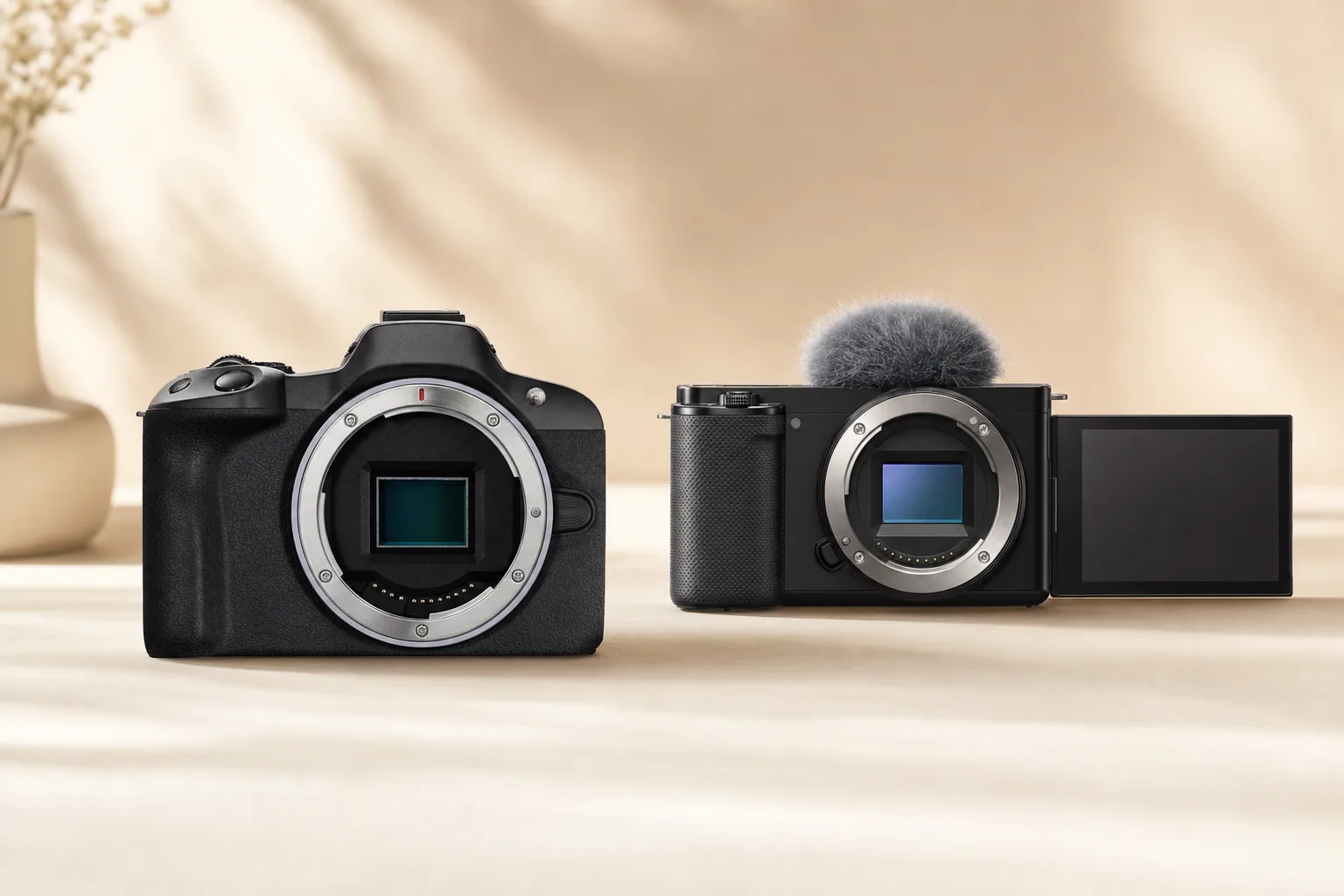
For the Canon R50 vs Sony ZV-E10 decision, the short answer is that the Canon EOS R50 is the better all-around hybrid camera thanks to its built-in viewfinder and uncropped 4K, while the Sony ZV-E10 is the sharper pick for a vlog-first creator who lives on the back screen and wants a deeper native lens lineup. Both are roughly 24-megapixel APS-C mirrorless bodies in the same entry-level price range, but they make opposite trade-offs that decide which one fits you.
At-a-glance: Canon R50 vs Sony ZV-E10 specs
| Spec | Canon EOS R50 | Sony ZV-E10 |
|---|---|---|
| Sensor | 24.2MP APS-C CMOS | 24.2MP APS-C Exmor CMOS |
| Autofocus | Dual Pixel CMOS AF II, subject detection | Fast Hybrid AF, 425 phase-detect points, Real-time Eye AF |
| Viewfinder | Yes - 0.39” 2.36M-dot OLED EVF | None (rear screen only) |
| Max 4K video | 4K30 oversampled from 6K, no crop; 4K60 with crop | 4K30 with crop; uncropped at 4K24 |
| Slow motion | 1080p up to 120fps | 1080p up to 120fps |
| Vlog features | Movie for Close-up Demos, articulating screen | Product Showcase, Background Defocus button, 3-capsule directional mic, included windscreen |
| Lens mount | Canon RF / RF-S | Sony E |
| Native APS-C lens choice | Small but growing RF-S lineup | Large, mature E-mount lineup (Sony + third-party) |
| Rear screen | 3.0” fully articulating touchscreen | 3.0” fully articulating (side-flip) touchscreen |
| Burst shooting | Up to 15fps electronic | Up to 11fps |
| Battery | LP-E17, ~370 shots (CIPA, LCD) | NP-FW50, ~440 shots (CIPA) |
| Weight (with battery) | 375g | 343g |
Where each camera wins
The single biggest hardware difference is the viewfinder. The Canon EOS R50 has a built-in 2.36M-dot OLED electronic viewfinder, and the Sony ZV-E10 has none at all. If you shoot stills, work in bright sunlight where a rear screen washes out, or simply prefer holding a camera to your eye, that gap is decisive in Canon’s favor. The R50 behaves like a proper little hybrid camera: it pairs that EVF with Dual Pixel CMOS AF II and subject detection, a 15fps electronic burst, and 4K30 video oversampled from the full 6K sensor width with no crop. For a creator who wants one camera for both photos and video, the R50 is the more versatile body.
The Sony ZV-E10 wins on vlog-first ergonomics and the lens ecosystem. It was built specifically for talking-to-camera content, so it adds a dedicated Background Defocus button (one press jumps to the lens’s widest aperture for instant bokeh) and Product Showcase, which smoothly pulls focus from your face to an object you hold up - ideal for reviews and unboxings. It also has a built-in 3-capsule directional microphone and ships with a clip-on windscreen, so your audio is usable straight out of the box. Its 425-point Fast Hybrid AF with Real-time Eye AF is excellent for keeping faces sharp.
The other quiet advantage for Sony is glass. The E-mount has a large, mature lineup of native APS-C lenses from Sony and third parties like Sigma and Tamron, so there is an affordable lens for nearly any focal length. Canon’s RF-S APS-C lens selection is smaller and still growing, which is the most common knock against the R50 - you may lean on adapters or pricier full-frame RF lenses to fill gaps.
Video shooters should note the crop behavior. The R50 records uncropped 4K30 (it only crops at 4K60), so your wide lens stays wide. The ZV-E10 applies a crop to its 4K30 mode and is only uncropped at 4K24, which tightens your field of view - something to plan around when vlogging at arm’s length in tight spaces.
Who should buy which
Buy the Canon EOS R50 if you want a true hybrid: meaningful stills shooting, a viewfinder for composing in any light, uncropped 4K30, and Canon’s friendly menus and color. It’s the better first “real camera” if photography matters as much as video.
In our catalog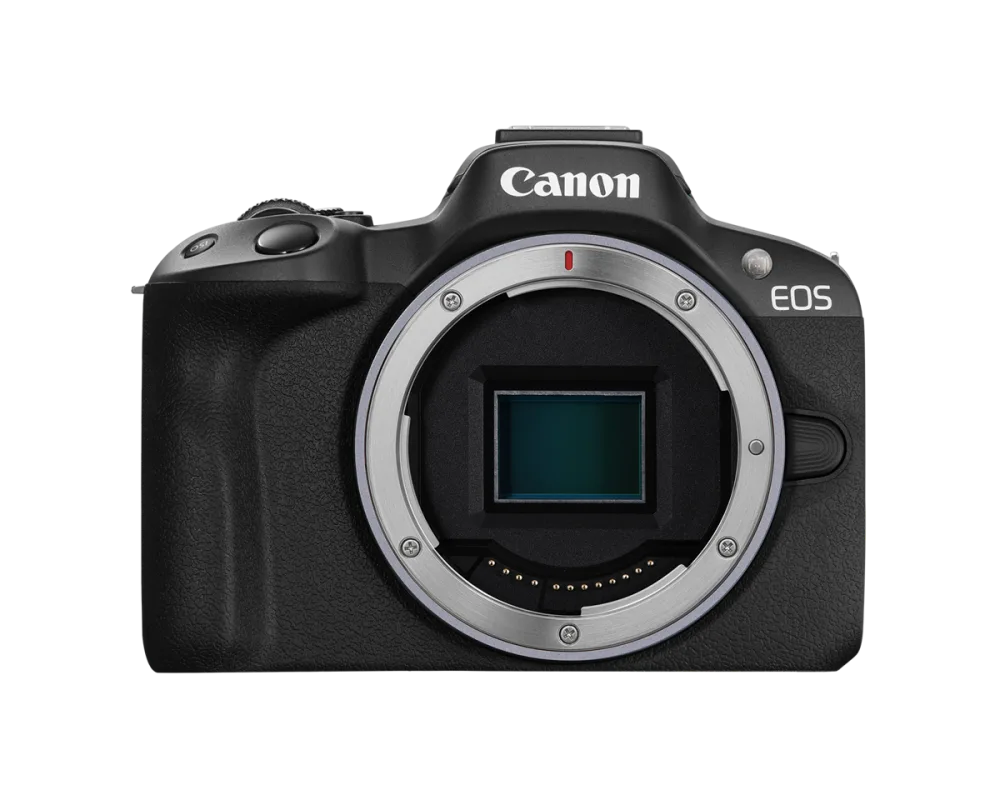 Canon · APS-C · MirrorlessCanon EOS R50$600See price comparison →
Buy the Sony ZV-E10 if you are primarily a vlogger, streamer, or short-form creator who composes on the flip-out screen, values the Background Defocus and Product Showcase tools, wants strong built-in audio, and wants the widest selection of affordable native lenses to grow into.
In our catalog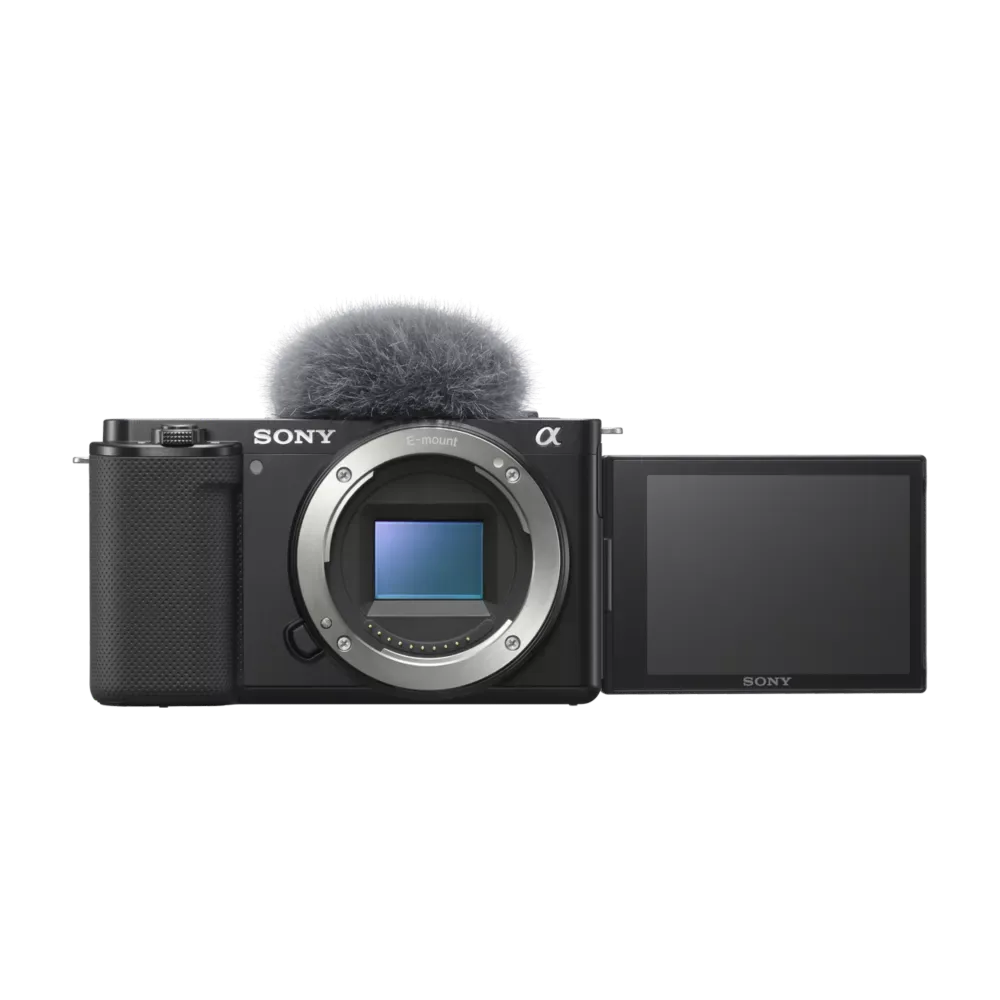 Sony · APS-C · MirrorlessSony ZV-E10from $610See price comparison →
Bottom line
Both cameras share a similar 24MP APS-C sensor and a similar entry-level price, so this is about fit, not raw quality. The Canon R50 is the more complete all-rounder because of its viewfinder, uncropped 4K30, and hybrid versatility. The Sony ZV-E10 is the more focused vlogging tool with creator-specific controls and a far deeper lens lineup, at the cost of having no viewfinder and a 4K30 crop. Decide based on whether you ever want to raise a camera to your eye and shoot photos (Canon), or whether you live on the flip screen making video (Sony).
Find the camera worth buying
We track real live prices and link you straight to the best deal — no fake discounts.