DJI Osmo Pocket 3 vs Pocket 4: Should You Upgrade?
A clear-eyed look at whether the newer DJI Osmo Pocket 4 is worth it over the proven Pocket 3, focused on the upgrade decision and price.
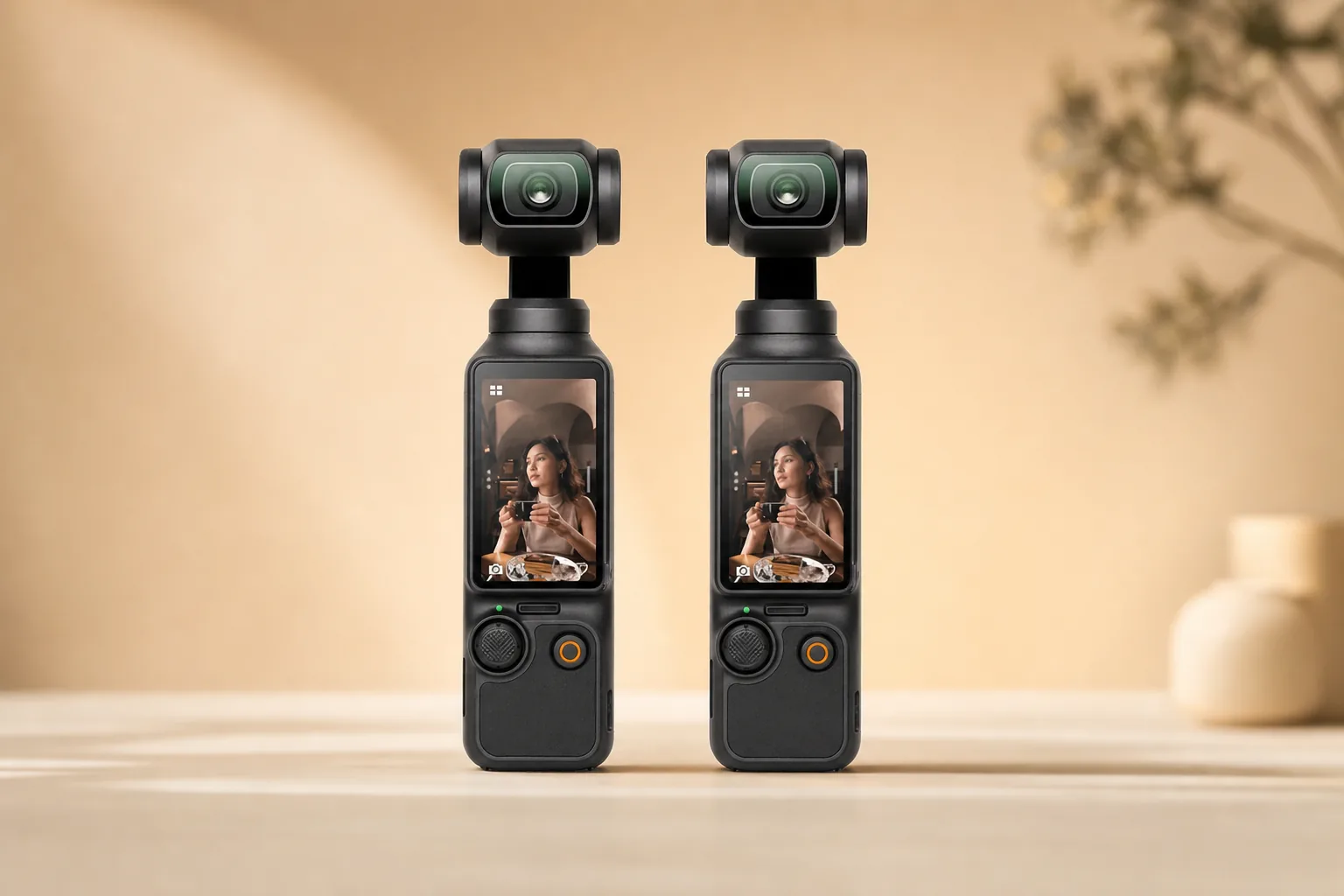
The DJI Osmo Pocket 3 vs Pocket 4 decision comes down to this: the Pocket 4 is a genuine generational upgrade with a new higher-resolution sensor, faster slow motion, a brighter screen, and built-in storage, while the Pocket 3 remains an outstanding pocket vlogging camera that is often cheaper and covers the same core creator needs. If you already own a Pocket 3, most people do not need to rush the upgrade. If you are buying your first gimbal camera, the Pocket 4 is the one to get unless price is the deciding factor.
Both cameras share the same DNA: a 1-inch CMOS sensor on a 3-axis stabilized gimbal, a 20mm-equivalent f/2.0 lens, a rotatable OLED touchscreen, and three built-in microphones. That shared foundation is why this is an upgrade-or-not decision rather than a question of which is better at the basics. They are both excellent.
DJI Osmo Pocket 3 vs Pocket 4 at a glance
Here is how the two compare on the specs that actually differ.
| Spec | Osmo Pocket 3 | Osmo Pocket 4 |
|---|---|---|
| Sensor | 1-inch CMOS, 9.4MP | New 1-inch CMOS |
| Photo resolution | ~9.4MP (3840×2160, 16:9) | 37MP (7680×4320, 16:9), DNG raw |
| Max video | 4K up to 60fps; 4K/120fps slow motion | 4K up to 60fps; 4K/240fps slow motion |
| Color / dynamic range | 10-bit D-Log M | True 10-bit D-Log, 14 stops |
| Screen | 2.0” rotatable OLED, 700 nits | 2.0” rotatable OLED, 1,000 nits, P3 gamut |
| Internal storage | None (microSD only) | 107GB built-in + microSD |
| Battery | 1300mAh, ~166 min (1080p/24) | 1,545mAh, ~240 min (1080p/24) |
| Stabilization | 3-axis gimbal | 3-axis gimbal |
| Subject tracking | ActiveTrack | ActiveTrack 7.0 (tracks at up to 4× zoom) |
| Microphones | 3-mic array | 3-mic array, spatial audio |
| Weight | 179 g | 190.5 g |
| Wired transfer | — | USB up to 800MB/s; Wi-Fi 6 |
| Price | ~$520–600 | ~$549–799 |
What the Pocket 4 actually upgrades
The headline change is the new 1-inch sensor. The Pocket 3 captures 9.4MP stills; the Pocket 4 jumps to 37MP photos at up to 7680×4320, with DNG raw and long exposures up to 4 seconds. For video, the Pocket 3 tops out at 4K/120fps slow motion, while the Pocket 4 doubles that to 4K/240fps. The Pocket 4 also moves from D-Log M to true 10-bit D-Log rated at 14 stops of dynamic range, which gives colorists more room in high-contrast scenes.
The 107GB of built-in storage is the most practical everyday upgrade. The Pocket 3 has no internal storage and relies entirely on a microSD card, so a forgotten or full card means you cannot shoot. The Pocket 4 lets you record straight to the camera and offloads at up to 800MB/s over USB. The screen is brighter too, going from 700 nits to 1,000 nits with a P3 wide color gamut, which genuinely helps when framing outdoors in sunlight. ActiveTrack 7.0 adds subject tracking at up to 4× zoom plus Spotlight Follow and Dynamic Framing modes, and the battery grows from 1300mAh to 1,545mAh, pushing rated 1080p/24fps runtime from 166 to 240 minutes.
Do these matter? The storage, brightness, battery, and slow motion are real quality-of-life wins. The 37MP stills and extra stop of dynamic range matter most to people who shoot photos or grade footage seriously; casual vloggers will barely notice.
In our catalog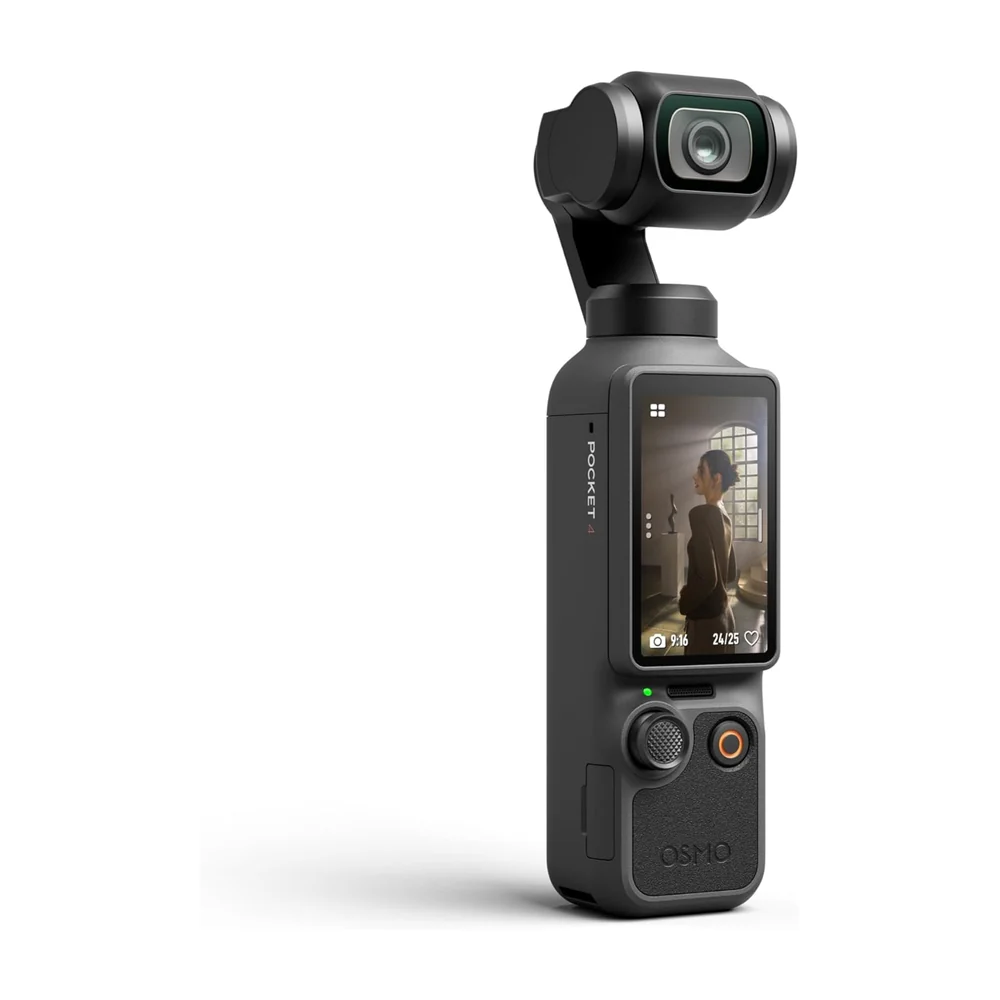 DJI · Compact sensor · ActionDJI Osmo Pocket 4$688See price comparison →
What the Pocket 3 still does well
The Pocket 3 is a proven, beloved camera and it is frequently the better value, especially as Pocket 4 demand keeps Pocket 3 pricing competitive on the used and discounted market. It shoots the same 4K up to 60fps and 4K/120fps slow motion that most social content lives at, with the same gimbal smoothness, the same f/2.0 1-inch sensor look, 10-bit D-Log M, the same three-mic array, and the same rotatable OLED screen. It is also slightly lighter at 179g versus 190.5g. For anyone whose ceiling is 4K/60 vlogging and short-form clips, the Pocket 3 delivers a nearly identical day-to-day experience for less money.
In our catalog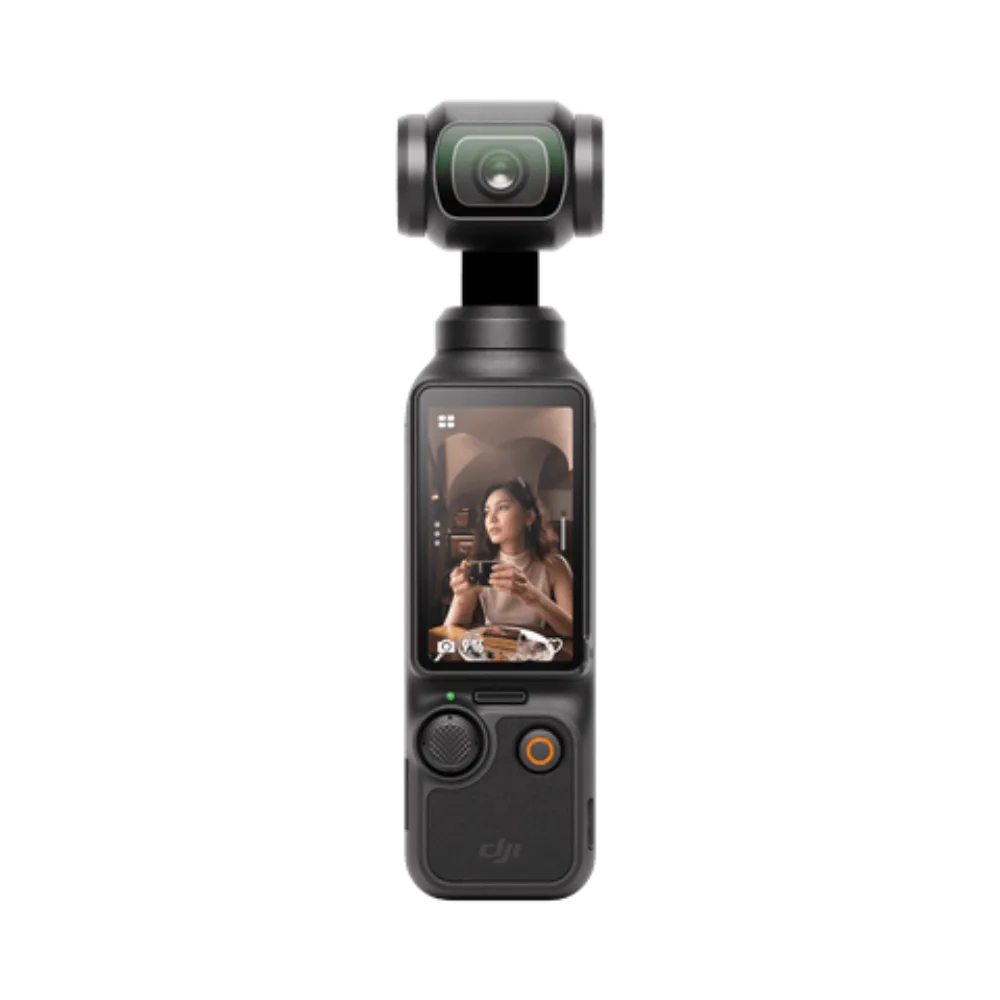 DJI · 1-inch · ActionDJI Osmo Pocket 3from $379See price comparison →
Who should buy which
Buy the Pocket 4 if you are starting fresh, you want the most future-proof option, you shoot stills or grade in D-Log, you frequently film outdoors in bright light, or you are tired of juggling microSD cards.
Buy or keep the Pocket 3 if budget is the priority, you mostly post 4K/60 social video, or you already own one. If you already have a Pocket 3, the Pocket 4 is not a must-upgrade unless you specifically want the higher-resolution stills, 4K/240 slow motion, or built-in storage.
Bottom line
The Pocket 4 is the better camera on paper and in practice, and it is the right pick for new buyers thanks to its new sensor, 4K/240fps slow motion, brighter screen, and 107GB of built-in storage. But the Pocket 3 is not obsolete; it is a still-excellent, often-cheaper option that nails the same core job. Choose the Pocket 4 for the upgrades that matter to your workflow, and choose the Pocket 3 to save money without giving up the things most creators actually use.
Find the camera worth buying
We track real live prices and link you straight to the best deal — no fake discounts.